
Our year in review
In April 2024, CNTW adopted a new biopsychosocial approach to how we assess, manage and record risk. This uses a personalised written assessment of someone’s risk, rather than rating factors on a checklist.
This was a significant clinical change for the Trust.
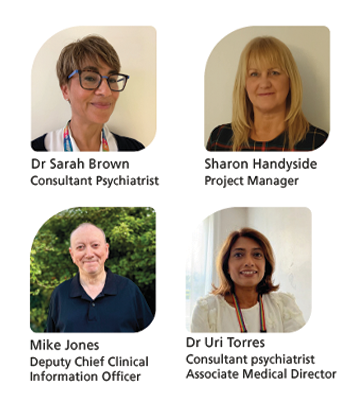
Sarah Brown, Consultant Psychiatrist, and Mike Jones, Deputy Chief Clinical Information Officer, told us about the process of embedding this change:
A long-term project
When we started this project, we thought it would be a task-and-finish group that would meet for about four months! However, it quickly became clear that we needed a consistent steering group in place, for a much longer-term piece of work.
It’s been an excellent example of a continuous quality improvement cycle within the Trust. Improving risk formulation and safety planning has remained one of the Trust’s Quality Priorities over the past year.
Right information, right place
The steering group had a clear vision from the outset that we should have one risk assessment per patient. This has been our focus right the way through.
When risk information is scattered about different places, people underestimate how much that can impact on patient care and safety.
Now, even if someone doesn't know a patient at all, they know exactly where to find that information on Rio to help them give safe care.
It’s a work in progress, but the quality and the consistency of risk information recorded is now much better than it was in the past. And because it is more meaningful and personalised, people are more likely to complete and use it.
Personalised and collaborative
The very nature of a biopsychosocial risk assessment means it’s often easier to do it jointly with the patient. It encourages people to really think about what they're writing, instead of looking for easy tick-boxes. It nudges people towards a much more collaborative process.
This makes each risk assessment and safety plan a more accurate and meaningful reflection of what's going on for that person.
Staying true to the vision
This was a substantial change. People needed to think differently. We knew it would be a learning curve for staff, and sometimes people can be resistant to change. We were careful not to make any knee-jerk changes to the approach early on.
The steering group was key, properly reflecting on any challenges or changes, because we knew that the principles at the core of this work were right.
But we have listened carefully to feedback, and have recently made some changes to the form which reflect this.
Training
Over the past two years we’ve improved risk assessment training at every level: from Trust-wide training, right down to team-level inductions. There are important nuances in how different teams approach risk assessment for the groups they work with.
Impact
Before we rolled it out, we met with carers and service users to review the biopsychosocial risk assessment form. Carers told us they were ‘delighted that the Trust is moving to a more holistic approach to risk and safety planning’. Service users were pleased that it would help us make sure that ‘personal views are taken into account’, and that it gave them ‘a feeling of being involved throughout’.
Since we launched this new approach the number of patients with a safety and risk management plan has risen significantly, and there has also been a downward trend in incidents of self-harm.
This article is part of our 2026 Annual Magazine, all around the theme of 'learning and improving'. You can read the rest of the articles here.