Cumbria, Northumberland, Tyne and Wear NHS Foundation Trust (CNTW) would like to thank all those involved for their time and ongoing commitment to the development of this report and their dedication to the Triangle of Care (ToC) initiative.
The six principles of the Triangle of Care are identified as a key quality priority for the Trust. We aim to enhance involvement and communication with families, friends, and carers in the delivery of care.
This approach promotes an inclusive culture where carers, service users, and staff collaborate effectively to ensure the provision of high-quality healthcare across all service areas.
Building on over ten years of Triangle of Care accreditation, the Trust continues to strengthen carer engagement across its services, recognising the vital role that families and carers have in all aspects of care delivery.
The six principles of the Triangle of Care promote collaborative working with service users, carers and staff:
Carers and their essential role are identified at first contact, or as soon as possible thereafter.
Staff are ‘carer aware’ and trained in carer engagement strategies.
Policy and practice protocols re: confidentiality and sharing information are in place.
Defined post(s) responsible for carers are in place.
A carer introduction to the service is available, with a relevant range of information across the care pathway.
A range of carer support services is available.
Carers Trust Feedback
The Carers Trust provided feedback regarding our 2024 Triangle of Care Annual Report, acknowledging the progress and innovations that the Trust has made together to support and value carers. The feedback highlighted:
Strong leadership and governance to ensure that Triangle of Care is a Trust priority.
Evidence of a transparent and open culture.
The development of leadership roles for carers.
The Trust also acknowledges the recommendations provided by the Carers Trust and responses are evidenced throughout this report.
Carer Promise
Our Carer Promise was formally launched in April 2023 at the Carers Conference. Developed in partnership with carers, this initiative aims to acknowledge and support their vital role in assisting individuals within the Trust’s services. The Carer Promise is based on the six core principles of the Triangle of Care, which promote a collaborative and supportive environment for carers. The Trust’s commitment to the four pledges outlined in the Carer Promise reflects its dedication to recognising
and valuing the significant contributions of carers:
You will be recognised, valued and involved.
We will work together with you to ensure we are all aware of your needs as a carer.
We will listen to you, share information with you, and be honest when there is information we cannot share.
We will talk with you about where you can get further help and information, and what you can expect from us.
Carer Cards 2024-25
Carers are given information at an initial appointment, including a Carer Card and supporting information. The Carer Card is a way of ensuring carers are fully recognised and valued for their involvement in the care of people accessing services.
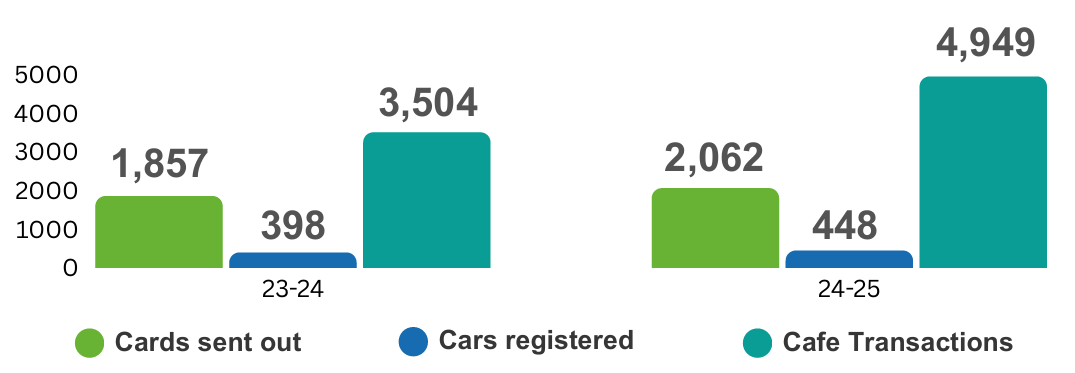
Additionally, the Carer Card offers 50% discount in CNTW cafes and free onsite parking. Carers are also given a Carer Promise leaflet, which summarises key information in one place.
2,000 Carer Cards were initially sent out across the Trust at the start of 2023, with a further 1,857 in 2023-2024 and 2,062 sent out in 2024-2025:
How carers are involved
The Lived Experience Service coordinates and facilitates service user and carer involvement on behalf of operational services and the Trust, underpinning and supporting the ethos of the Trust’s strategies ‘With you in mind’ and ‘Together: Service user and carer involvement strategy’. Supportive frameworks in the engagement of carers and our communities allow people to safely share their
expertise.
Involvement Bank
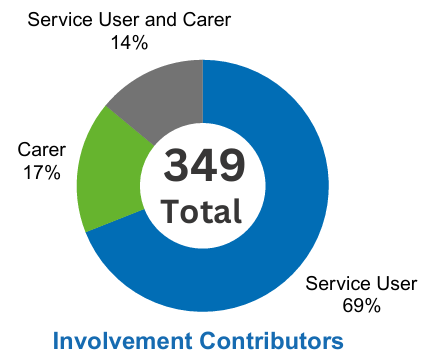
The Involvement Bank is a way for service users and carers, who are not paid employees of the Trust, to have their say and help shape services. Service users and carers (also known as Contributors) who
join the Involvement Bank can choose to be involved in areas of interest to them. An offer of a recognition payment is available in acknowledgement of their contributions.
In March 2025 there were 349 Contributors on the Involvement Bank, which is an increase from 2024 which reported 252 Contributors.
“Involvement strengthens personal empowerment; it improves skills and broadens lived experience and expertise. It is social, professional, warm, friendly, and non-judgemental. It is a place to be yourself and a space to grow. Above all else involvement is what each and every one of us wants it to be, and the Trust ensures that every point of view is listened to, every voice is heard, everybody counts.” - Involvement Bank Contributor
Youth Involvement Bank
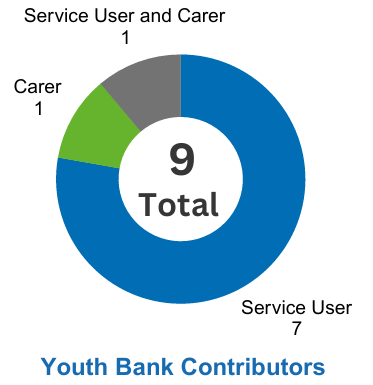
The Youth Involvement Bank supports young people aged 11 to 18 with lived experience, either as carers or service users, to get involved in shaping services. It provides a safe and supportive way for them to take part in activities such as working groups and recruitment panels.
Being involved helps young people develop valuable skills such as teamwork, communication, and leadership. They receive a Certificate of Participation, which includes a record of the skills they have gained. This can be used as evidence to support future education or employment opportunities.
When they reach the age of 18, they are offered the opportunity to join the adult Involvement Bank, where they can continue using their lived experience to help shape and develop services. The majority of young people choose to continue their involvement through this pathway.
Service User and Carer Reference Group
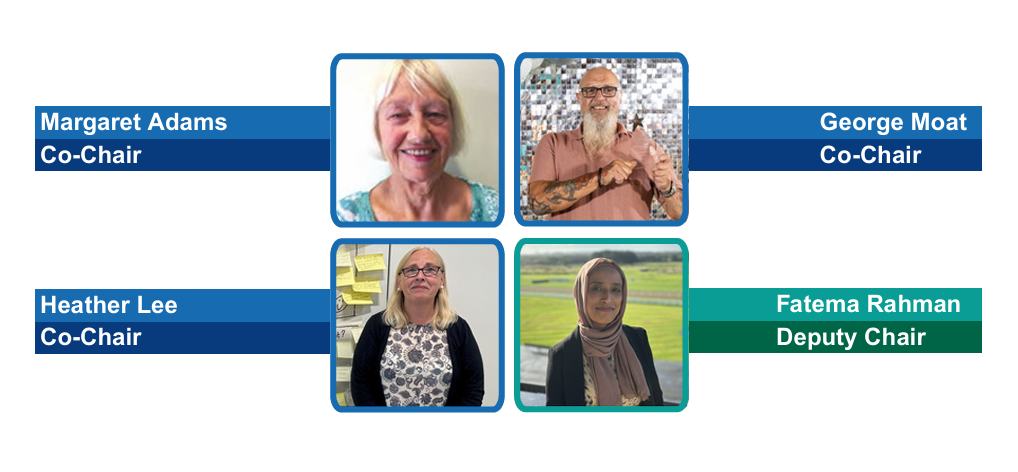
The Service User and Carer Reference Group is a bi-monthly lived experience engagement platform. The platform provides a safe space for service users, carers, Trust staff, and third sector organisations to learn from lived experience and influence change. The group is directed by a steering group and chaired by service users and carers.
2024 Service User and Carer Reference Group themes included:
Gender Dysphoria Services
Community Transformation
Accessibility
Veteran Support
Trauma Informed Care
Older People’s Services
“Becoming a co-chair of the Service User and Carer Reference Group provides a
fantastic opportunity to support the continued development of this forum, an exemplar in sharing information, shaping services and influencing change.
I am delighted to be part of the newly established team of co-chairs and am really looking forward to working together to help the Reference Group to build on its achievements to date, to raise its profile even more widely, ensuring that it becomes more fully embedded in the work of the Trust.
I am passionately committed to seeing it go from strength to strength, turning strategy into action with tangible results, championing meaningful involvement with the voice of lived experience always at the heart, and making sure that it continues to successfully bring about positive change for services, service users and their families.”- Heather Lee, Co-chair and Carer.
In December 2024, members of the Service User and Carer Reference Group collaborated with the Trust Leadership team to explore and promote the continued growth and development of the trust-wide engagement platform.
This involved considering how service users and carers could work more closely with corporate and operational services, widening the scope of topics discussed. This new approach has meant that the Service User and Carer Reference Group is now clearly aligned to informing and supporting Trust priorities, embedding a strong user voice in both local and national issues.
Carers Together Advisory Group
The Carers Together Advisory Group undertake focussed evaluations providing considered recommendations for improvements to service design, systems, processes and resource. Some of the work undertaken in 2024 includes:
The co-production of the Carer Record Practice Guidance Note. The guidance now sets out the process and principles that all staff across the Trust must follow when recording carers’ information.
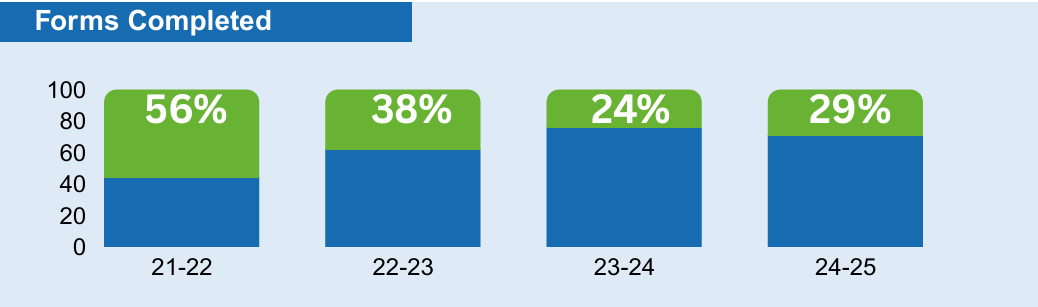
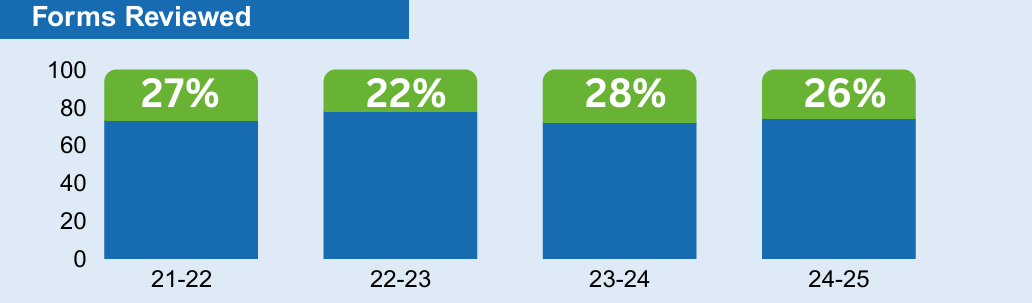
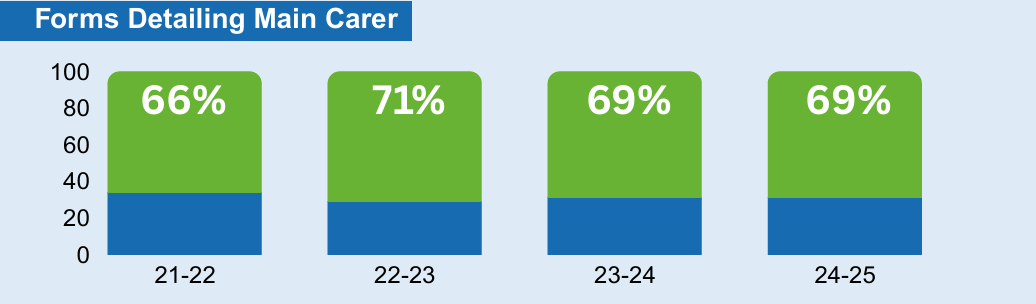
The review of the ‘Getting to Know You as a Carer’ form, which identifies those that provide a caring role to service users and how the Trust can best support them. The Lived Experience service has held initial working groups to review the current form and offer insight and recommendations for change.
Membership continues to includes carers, Carer Champions, Carer Leads, Carer Governors, external carer organisations and staff who are carers.
Trust Leadership Forum (TLF)
The TLF brings together the senior leaders of the Trust (Executive Directors, Group Directors, Associate Directors and others) to discuss key initiatives and priorities for the organisation. The Lived Experience Service were invited to attend the September 2024 TLF to facilitate workshops and discussions on how meaningful engagement and involvement can be further embedded across the Trust. Senior leaders were joined by service users and carers who shared their lived experience to support discussions.
Findings from the workshops:
Recognition: TLF recognise that ToC is important and a priority that should be invested in.
Carer Awareness Training (CAT): the Trust has a co-produced CAT package which is structured in line with ToC principles and delivered by operational care groups, co-facilitated with carers. Significant support was given by the forum to make CAT mandatory training for all clinical staff.
Carer Peer Supporters: employ more Carer Peer Supporters as they are having a positive influence on improving performance against ToC.
Staff supervision: performance against ToC principles should be embedded into staff supervisions.
ToC Dashboard: commissioning a dashboard for ToC performance was supported by the forum to provide the Trust with real-time comparative data for Quality Priority reporting as well as to provide services with the ability to analyse their progress against standards.
Utilising digital technology: create an animated video that explains ToC and compliment the CAT package.
Sarah Rushbrooke (Executive Director of Nursing Therapies and Quality) and the Lived Experience Service, brought the findings from the Trust Leadership Forum to the Service User and Carer Reference Group, providing opportunity for wider discussions. Themes that came out of the discussions included:
Carer Contact: Attendees stated that ‘Getting to Know You as a Carer’ needs to be face-to-face, rather than over the phone to ensure Carer’s voices are heard and involved meaningfully. It was highlighted that there needs to be a greater amount of carer contact across the Trust.
Communication: The use of jargon was raised as an issue, with attendees stating that complex clinical language is still being used when staff are talking with carers. It was also stated that transfer of care could be communicated better, involving carers in these discussions, wherever possible.
Training: Staff Carer Awareness Training was identified as a need, with a focus on the Carer Card being presented to carers in the ‘right way’.
North East and North Cumbria Regional Triangle of Care Group
This partnership and networking platform brings together NHS acute and mental health providers from across the geographical area. This regional platform is an opportunity for future partnership working to better support carers across our region. Representation includes:
Carers Trust
Cygnet Healthcare
Cumbria, Northumberland, Tyne and Wear NHS Foundation Trust
North Tees and Hartlepool NHS Foundation Trust
County Durham and Darlington NHS Foundation Trust
Tees, Esk and Wear Valleys NHS Foundation Trust
Northumbria Healthcare NHS Foundation Trust
Gateshead Health NHS Foundation Trust
North East and North Cumbria Integrated Care Board
Meetings have supported:
Carer Involvement
Sharing of good practice and knowledge for Triangle of Care standards 1 and 2
Supporting non accredited organisations to understand the accreditation process for the Triangle of Care
Quarterly meetings of the NENC Regional Triangle of Care Group are scheduled to be hosted by CNTW.
Carers Week 2024
The Involvement Service hosted an online carer event, which focussed on the 2024 Carers Week theme ‘Putting Carers on the Map’, emphasising the importance of amplifying the voices of unpaid carers.
The aim was to enhance the visibility of caring roles, ensure carers feel recognised and respected, and provide access to necessary services and support.
The session was attended by 93 participants and highlighted several notable initiatives within the Trust, including the efforts of Carers Leads to establish educational and support groups for carers in Cumbria, the development of the Family Ambassador and Carer Peer Support roles, the positive impact of a Carer Lead on inpatient wards in the North locality, and two personal success stories illustrating how carers have engaged with and collaborated with the Involvement Bank.
“It was well organised, and the speakers delivered an informative talk which was
welcoming, and it was good to hear some first hand experiences. It was also good to hear how much hard work is being undertaken to help promote this and also to ensure the trust is supporting carers where appropriate. I wasn't aware of how much support was out there for carers already within the trust."
Triangle of Care meetings
The Triangle of Care approach to completing self-assessments is different to other audit processes in that there is no pass or fail. It is an opportunity to reflect on current practice and implement change and build relationships with service users, carers and staff.
Each service area within the Trust has a responsibility to review the self-assessment tool and provide details on the status of ToC action plans to demonstrate how the ToC standards, and the criteria identified in each of these standards, continue to be implemented, progressed and developed.
Service users and carers are fully involved in this process to act as a critical friend and ensure transparency when completing self-assessments within specific ToC meetings.
Involvement Facilitators help coordinate the completion of the ToC self-assessments and continue to support services to help them better understand the information required within the self assessments and embed conversations within Team meetings.
Connect sessions
Connect sessions have been created for a service to meet with service users and carers who have lived experience of the service area. They offer an opportunity to discuss Triangle of Care self assessments and for service users and carers to challenge and/or offer insight and guidance. Connect sessions have been piloted on a small scale across the Trust.
The pilot promoted collaborative working in completing the self-assessments. This approach was designed to foster greater understanding and shared ownership. Contributors were supported to take on the role of a “critical friend” during the reviewing process, enabling open dialogue, mutual learning, and a reflective space for service users, carers and staff to examine practice together.
“The connect sessions I have been involved with relate to the Triangle of Care. We hoped to identify how various services within the Trust adhere to the principles and practices of the Triangle of Care. How services identify carers, engage in positive communication and obtain relevant information from carers family members. During the sessions we aimed to ensure carers are receiving appropriate support at critical times and receive up to date and relevant information. We also looked at elements of Carer Awareness Training for staff. By fostering positive collaboration between all three parties it hopefully enhances wellbeing and understanding. I have found my involvement with the connect sessions very rewarding and overall a very positive experience.” - Involvement Bank Contributor
“Our Connect Sessions with carers have continued to play a vital role in reinforcing the Triangle of Care, ensuring that carers are recognised, informed, and supported as key partners in care. These sessions provide a dedicated space for open dialogue, shared experiences, and mutual learning between service users, carers and staff. By actively involving them in discussions about care planning and service development, we help build trust, improve communication, and promote more person-centred outcomes for those we support.”- Carer Lead
Getting to Know You as a Carer
The ‘Getting to Know You as a Carer’ (GTKY) process is designed to identify individuals who provide care to service users. Information is collected during meetings with the carer and is maintained as a live document to facilitate ongoing conversations and support. These interactions can be documented within the carer's record.
The ‘Getting to Know You as a Carer’ process also involves understanding the wider family context of the person receiving care. By employing a 'Think Family' approach, our staff aim to gain a comprehensive understanding of the service users background and family circumstances, as well as to identify the primary carer(s) more efficiently.
GTKY as a carer is audited and feeds directly into the Triangle of Care self assessments.
This is not a carers assessment. A carers assessment is the statutory responsibility of the Local Authority and in some localities that is devolved to local carer centres.
Carer Feedback
Complaints
Complaints received by the Trust have increased during 2024-25 with a total of 816 received during the year. This is an overall increase of 37 complaints (5%) in comparison to 2023-24 and the highest number of complaints received per annum to date.
However, the number of upheld complaints reduced to 100 in 2024-2025 (down from 102 in 2023 2024, and 108 in 2022-2023).
Complaint Outcome
2022-23
2023-24
2024-25
Closed - Not Upheld
24%
25%
29%
Closed - Partially Upheld
34%
25%
24%
Closed - Upheld
16%
13%
12%
Complaint Withdrawn
15%
15%
11%
Decision Not To Investigate
5%
9%
10%
Still Awaiting Completion
1%
7%
8%
Unable To Investigate
5%
6%
6%
Of note regarding the three highest complaint categories:
Patient Care related complaints increased by 10%
Communications related complaints increased by 4%
Values and behaviours related complaints decreased by 15%
Complaints Case Study
A complaint was received from Mrs R, the wife of a service user. She was concerned about a lack of support provided and poor communication following the discharge of her husband from inpatient services. The 72-hour review took place in the Community Treatment Team rather than at home as originally advised. The family were left feeling unsure about what the review was for and there was a lack of support and communication while the Care Co-ordinator was on annual leave.
People involved:
Mr R - Service User
Mrs R - Carer
Mrs S - Investigating officer
Mrs J - Specialist Nurse
Investigation: Mrs S was appointed as the Investigating Officer to review concerns raised by Mrs R. She explained that the 72-hour follow-up appointment is a national standard, introduced due to the increased risk of suicide following discharge from inpatient care. The process is outlined in Trust policy and is closely monitored to ensure completion. Mrs S spoke with Mrs J, Specialist Nurse, who confirmed that a pre-discharge meeting would usually be held to agree the date, time, and location of the follow-up appointment. Patients are typically given a choice of venue, such as a home visit or team base.
Mrs J noted it would be unusual for a 72-hour appointment to take place without a discussion of the care plan, which generally includes, care and treatment planning, medication review, risk management, support for carers and families, and future appointment scheduling.
At the time of Mr R’s follow-up, his care coordinator was absent. In such cases, the attending staff would likely be aware of the absence and, while bound by confidentiality, should still offer a basic explanation for the Care Coordinator’s non-attendance. After the appointment, Mrs R contacted the Community Treatment Team, seeking support. Mrs J explained that in such situations, staff should pass the message to the Care Coordinator and, if they are absent, arrange contact with the duty worker for support and offer an appointment. An email should also be sent to the absent Coordinator to ensure prompt follow-up on their return.
However, this process was not followed. Mrs R was only told the Care Coordinator was on holiday and would have to wait for their return, with no further support offered.
Outcome: Mrs S concluded that it was possible that a decision was made at the 72-hour review meeting not to put any definite plans in place until Mr R’s Care Co-ordinator returned from leave and they could then have the discussion together. Mrs S apologised that this was not fully explained and acknowledged the confusion when Mr and Mrs R came away from the meeting with uncertainty about the care and treatment plan and were left uninformed. Mrs S apologised for the frustration and upset caused because the support available to Mrs R in the Care Coordinator’s absence was not made explicit and instead, she had to wait for her return. Overall, communication was not effective on this occasion and led to confusion and distress.
Action taken: As part of assessment and treatment protocols, the service offers a ‘Getting to Know You as a Carer’ to help staff understand how they can support family and carers. This can provide an opportunity to discuss concerns, help staff to understand needs, and consider how to best support family and carers. Sometimes it can lead a carer or family member to be referred to another service for information, advice and support. Mrs S has offered to arrange a meeting between Mr and Mrs R and the Team Manager to discuss her needs as a carer and for appropriate support to be put in place.
Your Voice
During 2024-2025 the Trust received 1,209 Your Voice experience surveys from carers, This was a 2% increase on the previous year.
The survey offers the Trust and individual teams an overview of satisfaction as well as identifying themes.
88% of carers said they had a good experience overall of services.
88% of carers said the care provided was good.
92% of carers said they felt involved in the care.
85% of carers said they were given information that was helpful.
90% of carers said they felt safe with CNTW services.
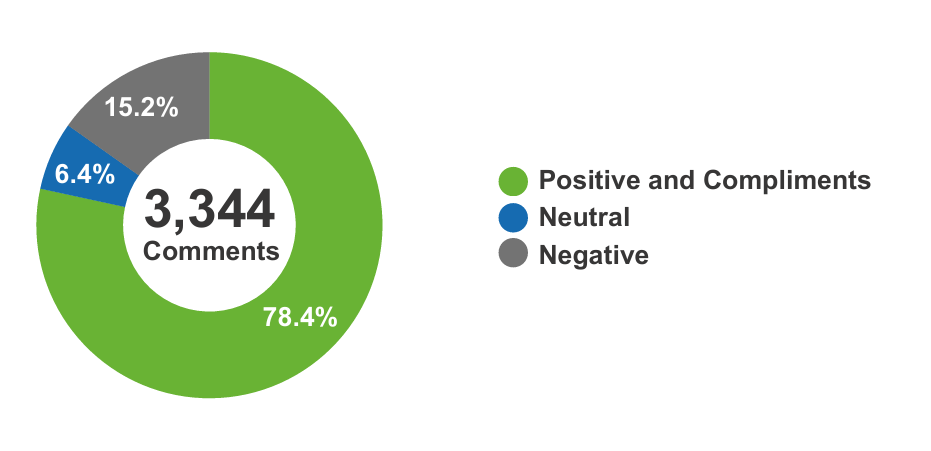
In total, 3,344 comments were offered by carers through Your Voice during 2024-2025. Positive comments and compliments combined accounted for almost 78.4% of all comments. 6.4% of comments were neutral and 15.2% of carer comments were negative in content.
“I always felt listened to and supported. Very good care provided. I know I could talk to anybody and I can get help immediately with anything.” - Carer, Your Voice Feedback
Together Strategy Review
The Together: Service User and Carer Involvement Strategy, initially launched in 2019, was collaboratively developed through lived experience sessions and input from the Service User and Carer Reference Group. In 2024, a review was conducted to evaluate its effectiveness and ensure it continues to address the needs of all stakeholders. This review process involved working groups comprising of Contributors, young people, and representatives from Secure Services. The updated strategy was presented to the Service User and Carer Reference Group to gather feedback.
Furthermore, a survey was distributed to all staff to collect additional insights regarding their understanding of the strategy and its integration within their teams.
The Together Strategy underpins the priorities of the ‘With You in Mind’ strategy. Working ‘Together’ and ‘With You in Mind’ is about valuing and utilising people with lived and learnt experience to improve the care we provide for people.
Above all else it is about people and how we need service users, carers, and staff working together to really make a difference.
“Involvement enhances understanding, fosters empowerment, strengthens
relationships, and drives positive outcomes. By working together, we can ensure that staff continue to adopt good practices when working with carers and families, while keeping carers at the heart of our delivery. We must continue to improve service design, systems, processes, and resources. By collaborating, we can achieve this.”- Anne Carlile, Carer Governor for Adult Services, Lead Governor
Spotlight on the Six Standards of Triangle of Care
Standard 1: Carers and the essential role they play are identified at first contact, or as soon as possible thereafter.
What is working well
In last year’s report, services demonstrated how they were identifying and engaging with carers during the initial assessment with service users, including recording this information through tools such as the ‘Getting to Know You as a Carer’ form.
However, there has been concerns about the consistency and visibility of carer engagement across services.
To improve this a Carers Record PGN was created with carers. The Carers Awareness Training has been updated to reflect this change and an additional information video has been shared to support staff to correctly record carer information within the Carer Record.
Additionally, the Trust has undertaken a review of it’s ‘Getting To Know You as a Carer’ form and where this sits within the Trusts IT systems. Carers, staff carers and clinical staff have been part of the review and it is waiting to be approved by the Carers Together Advisory Group.
As part of the ongoing commitment to the Triangle of Care, care plans are in place for every service user on each ward initiated at the point of the service user’s admission or transfer.
Early engagement ensures carers are identified promptly and involved from the outset helping to establish a clear partnership between carers and professionals in support of the service user. This conversation captures essential information from the carer, including what has led to the current admission, family history, previous hospital experiences, what has worked (or not), and the carer’s understanding of the service user’s needs, preferences, and baseline behaviour. Carers are also encouraged to share the service user’s likes and dislikes, which supports more meaningful
engagement and tailored interventions.
This valuable insight directly informs the 72-hour review and formulation process, helping the multi-disciplinary team deliver person-centred care that builds on the carer’s knowledge. The care plan also establishes how often the carer would like to receive updates, and outlines any additional support offered to help them in their caring role, demonstrating a commitment to shared care planning and ongoing communication. This approach not only strengthens therapeutic relationships between service users, carers and staff, but also ensures carers are recognised and supported as key partners in care.
What we are working on
Staff working in areas where Carer Lead roles are not in place, have noted concerns regarding the documentation of carer information. The process for this is shared with staff via the Carer Awareness training, highlighting that this information is to be stored within the Carer Record.
The Involvement Service are supporting operational services to increase the offer of ‘Train the Trainer’ sessions. The sessions are delivered with experienced staff, to enable future confident delivery of Carer Awareness training.
Furthermore, as highlighted elsewhere this report, carer contact and ongoing
communications are areas for further improvement.
Standard 2: Staff are ‘carer aware’ and trained in carer engagement strategies.
What is working well
Carer Awareness Training is well established across the Trust and includes key topics such as the use of the Carer Record in Rio, Common Sense confidentiality, and the role of carers in supporting advanced statements. The training was reviewed and updated last year by carers and staff to ensure it remains relevant and reflective of lived experience.
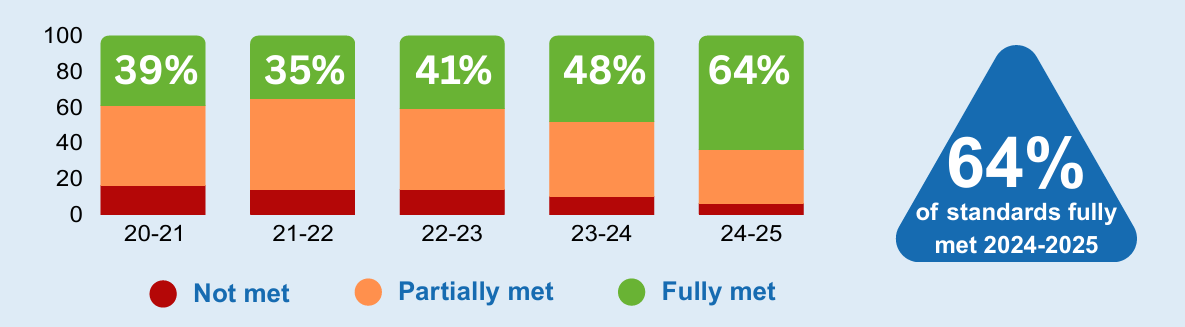
A new Practice Guidance Note (PGN), co-produced with carers, provides instruction on how to complete the Carer Record and has been integrated into the training. The Carer Record was implemented this year, providing a consistent approach to recording carer involvement across services. Staff understanding of the importance of engaging with carers and recognising their contributions has improved, as reflected in feedback and Triangle of Care self-assessment responses. There has been a 16% increase compared to last year in achieving the criteria for Standard 2.
The 2024 report highlighted a lack of knowledge and understanding from some staff in relation to advanced statements. The Triangle of Care recommends that ‘advance statements’ and directives are routinely used, which allow service users (with involvement from carers recommended) to record future care and treatment options. The inclusion of advanced statements in training has helped staff better support personalised care planning.
Prior to the pilot of Connect sessions, Involvement Facilitators delivered Triangle of Care training to Carer Contributors who had expressed an interest in being involved in taking part in the connect sessions. This training helped Contributors develop a good understanding of the framework, its six standards, and its overall purpose, ensuring they were well-equipped to participate meaningfully.
What we are working on
Although there has been an increase in achieving standard 2, further work is required to ensure consistent staff engagement with carers is in place across all teams and services. The Involvement Service are leading on a project to increase the number of Connect sessions across the Trust.
Carer Awareness Training has been made mandatory for all clinical staff, following on from the recommendations from TLF and the Service User and Carer Reference Group. The Involvement Service are actively recruiting and upskilling more carers to support the co-delivery of Carer Awareness training.
Staff supervisions, incorporating carer engagement, remains a key focus. Continued efforts are needed to maintain momentum, build confidence, and ensure staff feel supported in involving carers meaningfully in care planning and delivery.
Work is now well underway to develop a digital Triangle of Care dashboard, which will support monitoring of team-level progress and provide assurance that we are meeting our commitments under the Carer Promise.
Standard 3: Policy and practice protocols re: confidentiality and sharing information are in place.
What is working well
The introduction of the Carers Record within the Trust, has seen profound changes in the way staff work with carers. The Trust has an obligation to ensure that carers have the right to their own carer record, offering a safe space for information to be recorded about them in their role and needs as a carer, and not to be included in the records of the service user they support. The carer record further reinforces that information provided by carers is kept confidential and will not be shared with
the service user, unless carer consent is given to do so. The new record brings many positive changes to the Trust and how we support carers.
There has been a improvement in staff understanding of Common Sense Confidentiality across the Trust. Some services reported a greater understanding of what they can and can’t share with carers, whilst also understanding that not having ‘consent to share’ can not be used as a barrier to support carers. Confidentially has historically been an area of uncertainty with staff, but the overall confidence with confidentially is improving.
What we are working on
Despite the improvements Trustwide, it is still being reported by carers and staff that they would like further educational materials available around confidentiality. The Trust are looking to produce an interactive video, as a part of the Carer Awareness Training, that highlights good and bad practice when it comes to confidentiality. The video will give staff the opportunity to use their own instincts and knowledge to identify how we improve communication with carers and ensure confidentiality is
never used as a barrier.
Since the release of the ‘Discharge from mental health inpatient settings’ guidance which came into effect on the 26th January 2024, the Trust needs to consider this guidance to ensure carers are involved entirely in the discharge process. Some educational guidance on carer rights or further communications through the Trust internal newsletter would reinforce this knowledge across the Trust’s Inpatient settings.
Standard 4: Defined post(s) responsible for carers are in place
What is working well
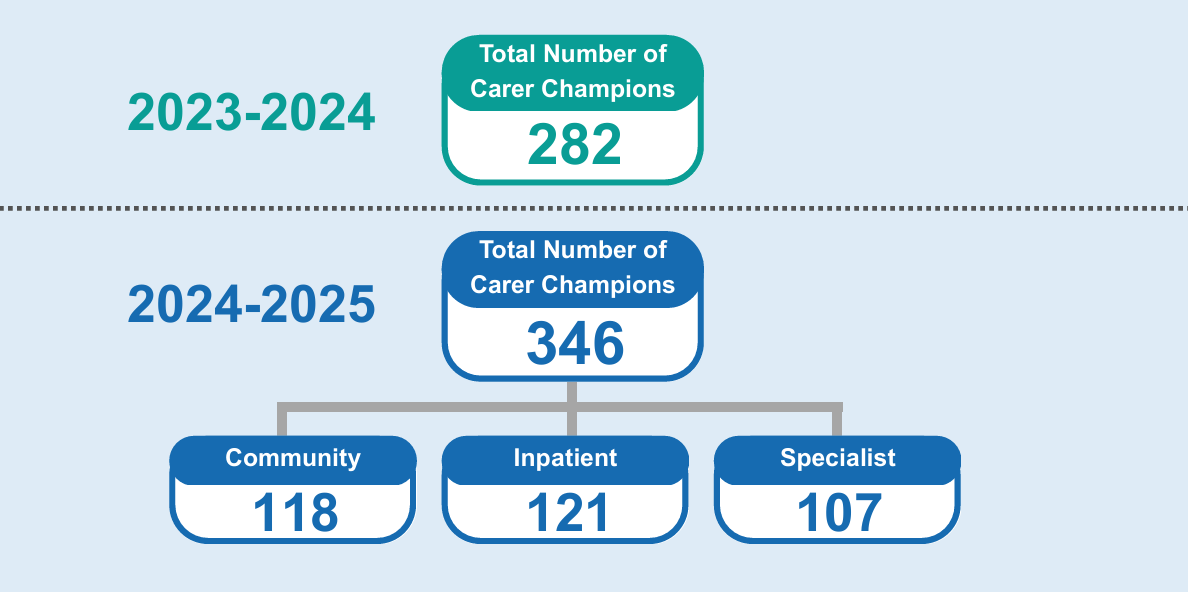
The Trust continues to have a work force which includes a variety of carer dedicated roles to ensure there is a focus on carer support, wellbeing and opportunities to influence service design and delivery. Last year, the ToC self-assessment returns identified a need to increase the number of Carer Champions across the Trust. There has been an increase of 64 Carer Champions taking the total to 346. It is important to note that carer dedicated roles are not comparative across all services. However, services are encouraged to consider how to implement or develop carer dedicated roles within their service area with support from the Lived Experience Service.
Carer Champions
A Carer Champion is a staff member who is a key contact for carer information for the team where they work in addition to their substantive job role. Carer Champions are vital to the successful implementation of the Triangle of Care. There has been a substantial increase of Carer Champions compared to last year:
Our Family Ambassadors offer emotional and practical support for families of children and young people who are accessing children and young people
inpatient services. This includes General Adolescent Units, Learning Disability Units, Psychiatric Intensive Care Units, Low Secure Units and Medium Secure
Units. The Trust has two permanent Family Ambassador roles.
The Trust’s two Family Ambassadors have recently completed the Working with Families and Systems Foundation Level training. The course focussed on how to engage with individuals, couples and families within a health context. It explored how narratives, experience and context shape relationships and influence practice when working with families and couples. The training enables the Family Ambassadors to continue their professional development and strengthens the
support provided to families of children and young people in inpatient services.
CNTW's Staff Excellence Awards celebrate the dedication, hard work and achievements of the Trust staff who’ve made a real difference to service users, carers or work colleagues. Family Ambassadors Katie Watson and Rachel Noble were awarded the Behind the Scenes Team award for 2024, which recognises the achievement of a service or team that works behind the scenes in a non-clinical support service.
"This team has been described as a revelation! They support families to navigate their child’s stay in hospital, making sure they feel valued and heard. Parents and carers have a unique perspective on the needs of their loved ones and thanks to the family ambassadors, their views are an integral part of decision-making. Using their own lived experience, the team help staff understand the role families can play as part of the care team. No decision is made without family involvement and the young person and their families are at the heart of their care. Thanks to the team’s hard work and dedication, families feel more empowered. Described as a lifeline, colleagues say the team provides valuable support to families as well as helping to free up clinicians’ time. Feedback has been overwhelmingly positive, with one family member describing the team as a blessing."— Staff Excellence Awards 2024
Within the Trust, Carer Champions and Family Ambassadors have provided flexible, person centred support to young carers, guided by the young person’s individual needs. This support has included:
Building trusting relationships through shared activities such as board games and creative engagement.
Referrals to local carers centres for Young Carer Assessments.
Creating informal, safe spaces to encourage open conversations.
Offering systemic-informed sessions exploring relationships, support networks, and strengths.
This work highlights the value of relational, strengths-based approaches in supporting young carers across the Trust.
Carer Leads facilitate positive change for carers and families and are pivotal in developing cultural change. The role improves the experience for carers of service users who access the Trust’s services; this includes offering practical and emotional support, training staff to be more carer aware and supporting the development of Triangle of Care within their service.
“The need for the hospital to have a Carer Lead has proved invaluable and shown just what a difference this makes to the recovery of a loved one and the sanity and strength of the carer. Before, we felt like we were in a house of cards but now we are in a really strong, safe place with the correct infrastructure to succeed.”- Carer of Inpatient Service User.
Involvement Facilitator
Involvement Facilitators ensure the voice of service users and carers are meaningfully involved in the planning, delivery and evaluation of the Trust’s services to enable innovative methods to influence service improvement. The role supports services to develop sustainable engagement and involvement with service users and carers through a range of methods to enable their voices to be heard. For example, through the implementation of service user and carer forums, the Trust’s Involvement Bank, the Youth Involvement Bank and Triangle of Care forums. This work is underpinned by the Trust’s Together: Service User and Carer Involvement Strategy.
Carer Peer Supporter
Carer Peer Supporters utilise their own lived experience to share insight and understanding while working exclusively with carers and families. They identify and signpost carers to valuable support available within the Trust as well as from external organisations. Carer Peer Supporters ensure carer support is as accessible as possible, by offering one to one support and developing and facilitating carer support groups. They also deliver education sessions to promote their role. A Carer Peer Support Huddle enables Carer Peer Supporters to come together to share good practice, overcome challenges together and provide peer support.
The Trust has three new Carer Peer Supporter roles working within Eating Disorders, Complex Neurodevelopmental Disorders Service, and Children and Young People’s Neurodevelopmental Service.
What we are working on
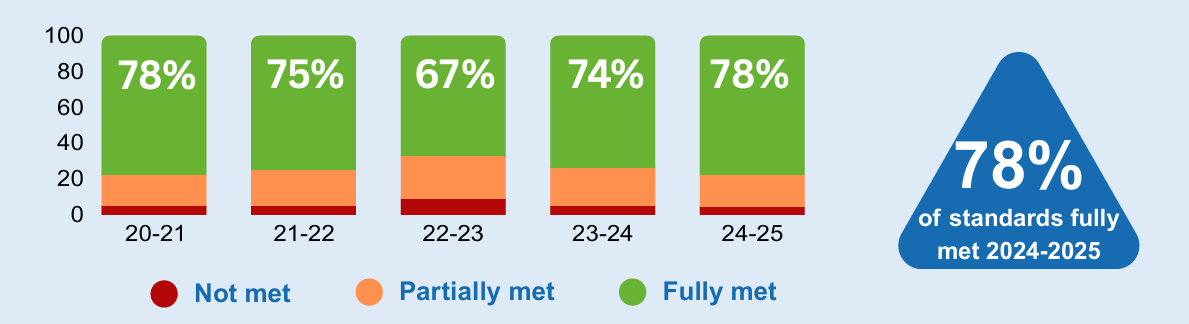
There has been a small decrease in compliance for Standard 4 compared to last year’s returns. This is likely due to a thorough focus from the Lived Experience Service about what a carer dedicated role is. Although there has been a decrease, this is arguably a more accurate reflection of where the services in the Trust are with this Standard. The impact of carer dedicated roles, such as the Carer Lead feedback detailed above, demonstrates the positive impact the roles have on family experience.
The Lived Experience Service will continue to showcase the impact lived experience roles have on service user and carers experience to promote this across the Trust and advocate for more carer dedicated roles over the coming year.
Standard 5: A carer introduction to the service is available, with a relevant range of information across the care pathway
What is working well
Carers are warmly welcomed by staff and are provided with information about available services, as well as practical guidance to support carers themselves. In inpatient settings, many wards have adopted the use of visual “Meet the Team” boards and facilitate introductory calls to enhance understanding and connection.
Another key strength is the clear identification and communication of a designated staff contact for each carer. This approach ensures that carers know who to approach and how to contact them, thereby improving continuity of communication and alleviating anxiety for families navigating the care process.
Information provision across the Trust further demonstrates strong alignment with Standard 5. Carers have access to a comprehensive range of resources tailored to individual needs, including accessible formats such as Easy Read. Additionally, many teams provide condition-specific leaflets (e.g. relating to psychosis or eating disorders) to help carers gain a better understanding of the experiences of those they support.
What we are working on
Whilst progress has been made in meeting Standard 5 of the Triangle of Care, there remains key opportunities for further enhancement. The Trust has advanced in piloting feedback collection via text messages but digital accessibility remains an area for development.
Carer information resources are broadly distributed; however, carers have reported inconsistency in how the information is explained. In some instances, carers receive written materials but lack opportunities to discuss them thoroughly with staff. This highlights the importance of ensuring that all staff are confident and prepared to engage in supportive conversations with carers early in the care process.
Ongoing efforts to standardise communication, improve digital tools, and strengthen staff support will help ensure that all carers receive a consistently high standard of information, welcome, and inclusion across the Trust.
Standard 6: A range of carer support services is available
What is working well
The Trust is able to support carers in many different ways, but it is essential that all staff are linking in with Recovery Colleges and Third Sector Carer Organisations. These community services help to provide further support to carers in their local areas. Staff are able to utilise Trust resources and are encouraged to ‘signpost’ to these agencies to ensure carers are getting all the support available to them.
Following on from last years report, there is a dedicated Supporting Carers page within the Trust’s Lived Experience Intranet page. This page has the latest carers leaflets, updated Carer Awareness Training and is constantly updated by the Involvement Service. It’s important that all staff have easy and quick access to carer resources and this new resource supports this.
The Trust has a long running Staff Carer Network, a supportive place for staff members who also play a caring role to attend and receive peer support. A staff members role can be stressful and difficult within itself before adding the difficulties that comes with being a carer. It is a resource that provides direct support for staff carers.
The Trust has incorporated the new statutory right to unpaid carer’s leave into its Special Leave Policy.
The Alice Project
The Trust are involved in many other innovative and co-produced workstreams for example, The Alice Project which was initiated in response to the lived experience of a carer and the recognised gap in day care services for individuals living with dementia in Northumberland. Currently, there is no dedicated day care provision specifically tailored to support people with dementia within the region.
This project was conducted as a service evaluation, with the primary aim of exploring carer strain and the lack of respite opportunities available for carers of people living with dementia. The evaluation methodology included a series of focus groups with carers, supplemented by structured feedback questionnaires to gather qualitative and quantitative data on their experiences and needs.
The findings of the Alice Project have been disseminated to key stakeholders, including Carer Centres, the Alzheimer’s Society, the Local Authority, and other NHS organisations. These findings are now informing ongoing discussions around the development of future respite and support services for dementia care in Northumberland.
What we are working on
Each service within the Trust has a different way of working and has a different level of contact with carers. This could be long-term family support on an inpatient setting, or a short intervention with a carer whose loved one is in crisis. All teams and staff must adhere to the Triangle of Care principles. However, staff understanding their role within Triangle of Care can fluctuate from service to service. Services who have considerable contact with carers have a greater understanding of the Triangle of Care and what support is available, where services with limited contact aren’t always sure of their responsibilities to carers and what support they can signpost to. The
implementation of mandatory Carer Awareness Training will help strengthen staff understanding across the Trust.
Specific dedicated roles within the Trust have been offered ‘Family Therapy Training’ which the utilise within their work with carers. However, this training isn’t available Trustwide and has not been offered to all carer dedicated roles. It would be beneficial to look into the training and determine if future delivery could be offered to more members of staff.
Future plans
Building on the progress of the past year, the Trust is committed to further strengthening the Triangle of Care (ToC) framework and carer engagement across all services.
Wider Implementation of Connect Sessions: Following the success of the pilot, Connect Sessions will be expanded Trust-wide, enabling more service users and carers to contribute directly to self-assessments and service development.
Mandatory Carer Awareness Training: Efforts will focus on ensuring a highly experienced staff group are trained to deliver the mandatory Carer Awareness Training (CAT) across the Trust for all clinical staff members. This will be co-delivered with carers.
Digital Development of a ToC Dashboard: The introduction of a Triangle of Care Dashboard will enable real-time monitoring of team-level progress, providing transparency, accountability, and data to support continuous improvement.
Young Carer Inclusion: To expand the Youth Involvement Bank to include more young carers, including siblings of service users, offering them a stronger platform to share lived experience and shape service design.
Strengthen Discharge Processes: Improvements will be made to ensure carers are consistently included in discharge planning, aligning with national guidance and internal learnings from complaints and feedback.
Training Equity: The Trust will explore expanding access to Family Therapy training for carer specific roles to build capacity and ensure equity in carer support across services.
Enhance Data Collection: To consider how ethnicity data on carers is collected to identify and address any disparities in access or experience.
Partnership Enhancement: To deepen collaborations with local authorities, Integrated Care Boards, third-sector organisations to strengthen carer support and pathways. No Wrong Doors Exploration: The "No Wrong Doors" approach for young carers will be explored further, and consider inclusion within the Carer Awareness Training.
Patient and Carer Race Equality Framework (PCREF) Implementation: Continue the work of the PCREF steering group, led by the Workforce and Organisational Development Team, and provide updates in subsequent reports.
Conclusion
The Triangle of Care Annual Report 2025 shows that the Trust has made strong progress in recognising, involving, and supporting service users and carers as key partners in care. Over the past year, the Triangle of Care principles have been embedded more deeply across services.
Initiatives like the Involvement Bank, Connect Sessions, and the Service User and Carer Reference Group have given service users and carers more opportunities to shape services and share their experiences. These collaborative approaches have helped create a culture of openness, inclusion, and innovation.
Support for young carers has also improved, with more being included in the Youth Involvement Bank and greater awareness raised through training and events.
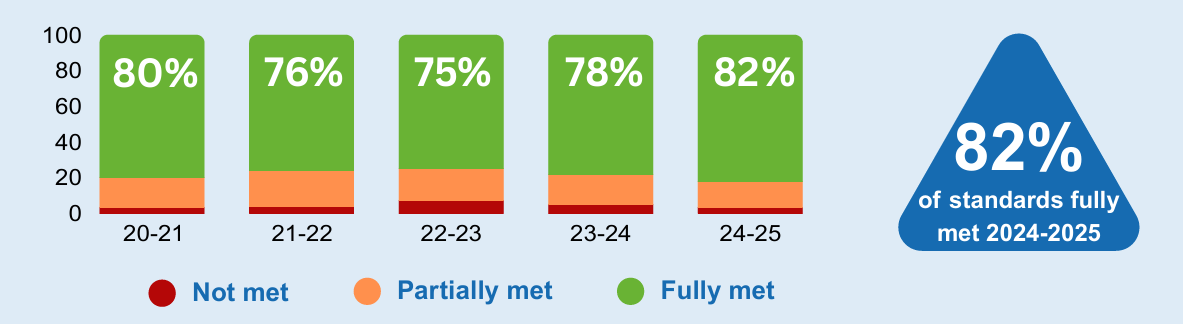
The review of Carer Awareness Training has been pivotal for strengthening understanding, improving communication, and ensuring that staff are fully equipped to support carers. Carer Awareness Training has seen a 16% increase in compliance with Standard 2 of the Triangle of Care. Overall, 64% of services fully met this standard in 2024–25, an increase of 48% from the previous year.
Plans to formalise the training as mandatory across the Trust, alongside the development of a Triangle of Care Dashboard demonstrates the Trust’s commitment to accountability, transparency, and measurable improvement.
Your Voice feedback from carers has been positive:
88% said they had a good experience overall
78.4% of all comments received were compliments or positive feedback
Other Triangle of Care standards also saw strong results from services:
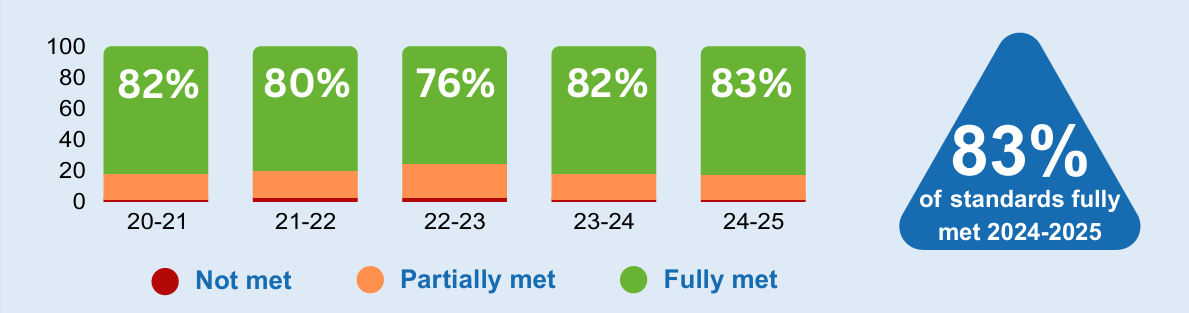
83% met Standard 1 (identifying carers at first contact)
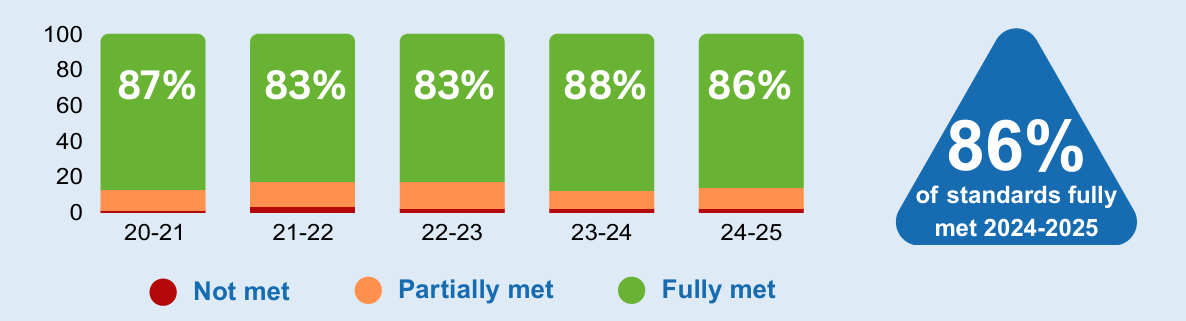
86% met Standard 4 (having defined posts responsible for carers)
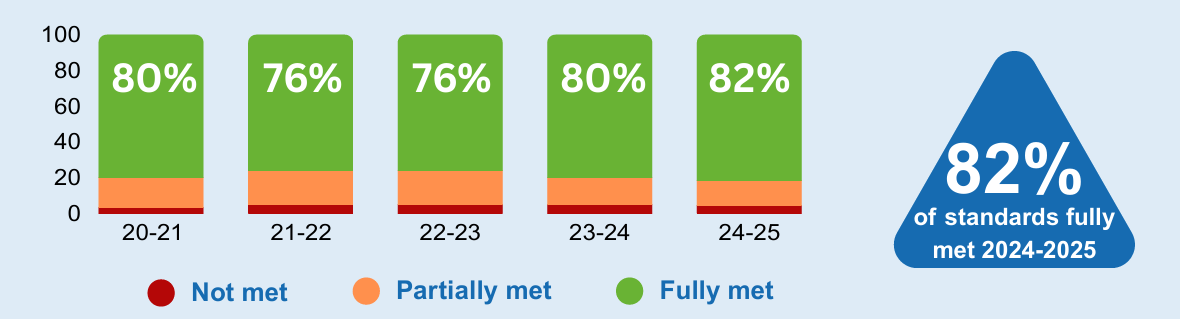
82% met Standard 6 (providing a range of carer support)
Carer Champions increased by 64, bringing the total number to 346.
These results show that the Trust is building a culture where carers are not only recognised but actively involved and supported throughout the care journey.
The Trust would like to thank everyone who continues to support a collaborative framework around the Triangle of Care, most notably carers, Carer Champions, Carer Peer Supporters, Carer Leads, Family Ambassadors, and Involvement Facilitators.