

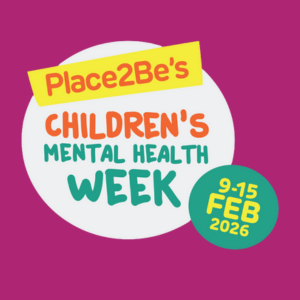
This week is Children’s Mental Health Week 2026. We asked parents who are part of our Involvement Bank to share their thoughts and advice for other people whose children are struggling with their mental health:
Have a codeword to share worries
“For both my children, we have a code word: ‘peaches’. Saying ‘peaches’ is how they can tell me they have a worry. Sometimes it is hard for them to say what their worry is – this way, I know there is something they want or need to talk about.”
“I always encourage my children to talk openly about anything that makes them nervous or concerned. I try to take all their thoughts seriously; it might not feel massive to me, but it will to them.”
It’s OK to say ‘no’
“Children nowadays live in a fast paced, critical world. Navigating their own paths will lead them to obstacles. How can you expect them to deal with these obstacles if you don’t equip them with the right tools? I teach my children that it’s ok to say ‘no, I’m not ok with that’ or ‘that made me feel weird’. It’s not mollycoddling – it’s fortifying, and it will lead to stronger, more agile adults.
“It’s ok to stand up for people, even when society might suggest you conform in a certain way. Find strength in advocating for your child. This strength will eventually transfer to them.
“And share this knowledge with family and close friends, so that they know what to avoid or encourage too.”
Communication is key
“As a Mum to two teenage girls, life can certainly be hectic at times… most of the time, actually!
“Both of my girls are neurodiverse, with a range of other conditions, and are very different from one other. What works for one doesn’t work for another and vice versa.
“We’ve spent a lot of time on NHS waiting lists for assessments, diagnoses and treatments, and those in-between moments of not knowing what’s coming next can be some of the most unsettling for everyone in the household. All we wanted were some answers and a plan, but this takes time and can be a lengthy process.
“As a family we found taking one day at a time helpful, not looking too far ahead. Sometimes making it through the day was an achievement in itself.
“Communication was our key – sounds pretty straightforward, right? When even simple chats led to deep-rooted arguments, it was tempting to give up. But we found our way through.
“This meant finding different ways of communicating, in a way that both my girls found manageable.”
Texting allows time to find the words
“We took to texting each other at night times; my youngest daughter found it hard to verbalise what was going on, especially in the midst of a busy day. Sometimes we were even in the same room, but this approach meant she could tell me what was going on in private and could find the words she needed.
“I also found it easier to reply by text, as this gave me time to think about my reply rather than simply reacting in the moment. If then she wanted to have a face-to-face chat, she could, and the choice was there for her to choose.”
Weekly meals
“We also have a weekly meal together where we go around the room and each person (including the adults) shares something that was challenging that week for them. We have a quick chat about how they approached the challenge and the outcome.
“We then move on to our ‘something to celebrate’, which explores what went well that week or something they’re looking forward to. This may be as simple as making it through the day, or getting the kitchen drawer cleared out! Maybe it’s been a school day or a meeting that went well.
“This positive approach helps us to start discussions that may not have come up otherwise. It helps us all to see that there is always something to celebrate, no matter how simple it may seem.”
Find out more about Children’s Mental Health Week